
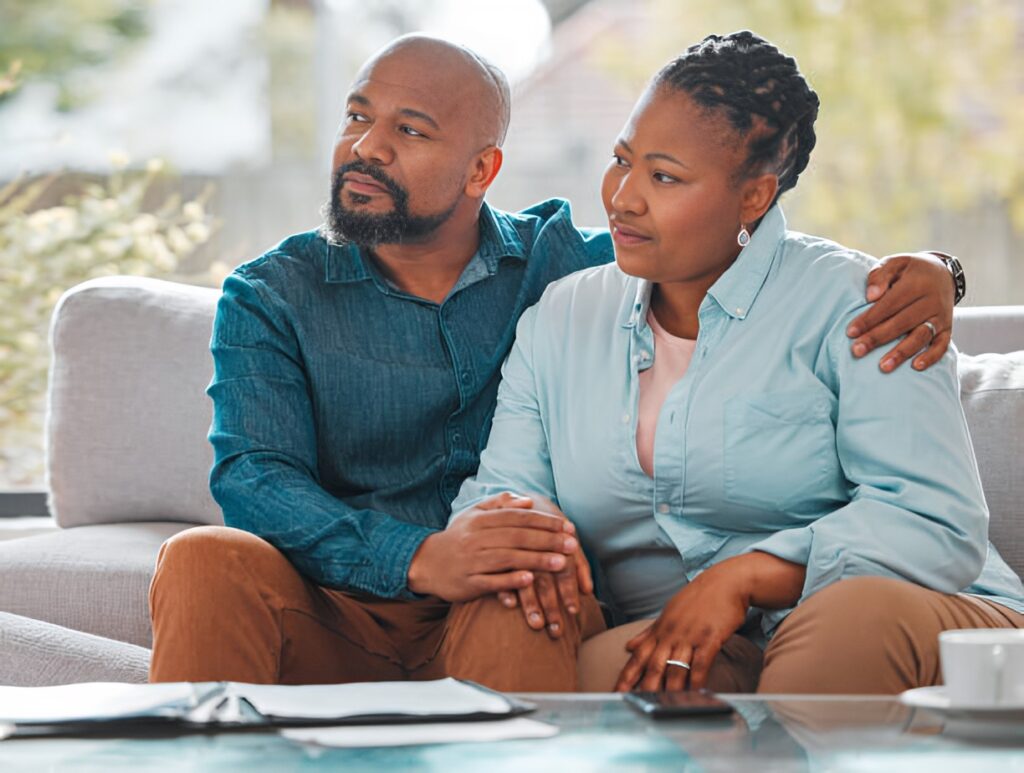
There’s a moment many couples don’t see coming—one that quietly creeps in, often without warning. At first, it’s small. One partner feels tired all the time while the other still has energy. One becomes more irritable while the other feels confused, wondering what changed. One partner’s body begins to shift in ways they don’t recognize. And perhaps most difficult, one partner suddenly feels less interested in intimacy while the other is left feeling rejected, confused, or alone.
Almost every couple eventually reaches this silent turning point, and most have no idea what’s causing it.
I see this all the time at OC Wellness in Newport Beach. One partner schedules an appointment because something feels “off” in their body, brain, or mood. But within a few minutes of conversation, it becomes clear that what’s happening is bigger than one individual. It’s affecting the entire relationship.
You may feel like you’re growing apart. You may feel like you’re changing while your partner stays the same—or vice versa. You may feel tension building where it never existed before. Or maybe you’re both wondering why you suddenly feel mismatched emotionally, physically, or intimately.
What couples often don’t realize is this: you’re not growing apart—you’re aging differently. And the reason is hormonal.
Hormone decline doesn’t affect everyone equally or at the same speed. One partner may enter perimenopause, menopause, or andropause years before the other. One may experience symptoms intensely, while the other barely notices their own changes. And if hormone shifts go unaddressed, the relationship starts absorbing the consequences.
The good news? Once you understand what’s really happening beneath the surface, everything becomes clearer—and much easier to repair.
This blog is a deep, honest exploration of how hormones impact relationships, why partners age differently, and how hormone therapy for couples Newport Beach programs at OC Wellness can bring couples back into alignment physically, emotionally, and intimately.
Let’s begin where most couples start: confusion, frustration, and the sense that something is wrong…without knowing what.
When One Partner Changes First: The Unspoken Emotional Impact
When hormone levels shift, the changes are not just physical. They influence mood, desire, energy, empathy, drive, patience, and communication.
But because these symptoms emerge slowly and unpredictably, they’re often misinterpreted.
One partner becomes short-tempered.
One becomes withdrawn.
One becomes more emotional.
One loses interest in intimacy.
One becomes anxious or overwhelmed.
The other partner doesn’t know why.
To them, it feels personal. And without understanding the hormonal root, they naturally assume:
“I did something wrong.”
“They’re no longer attracted to me.”
“They’re losing interest in us.”
“We’re growing apart.”
“They don’t care the way they used to.”
But these interpretations are rarely accurate. Most of the time, the partner experiencing hormonal changes is struggling internally and doesn’t know how to articulate it.
The mismatch creates tension that neither partner fully understands.
This is where relationships begin to drift—not from lack of love, but from lack of clarity.
How Hormones Influence the Way Couples Connect
What many couples don’t realize is that hormones power the emotional engine of the relationship. When hormones shift, the relationship dynamic naturally shifts too.
Here’s how hormonal changes show up inside relationships:
Mood Shifts
Estrogen, progesterone, testosterone, and thyroid hormones all help regulate mood. When levels drop, the partner impacted may feel sad, irritated, overwhelmed, or emotionally flat.
Emotional Availability
Low hormones reduce emotional resilience, making small stressors feel magnified. One partner may seem distant or easily triggered.
Communication Changes
When your brain is tired or foggy, communication naturally suffers. Misunderstandings become more common.
Physical Touch
Low testosterone or estrogen can reduce the desire for touch—not just intimacy, but affection, closeness, and warmth.
Libido Mismatch
One partner may experience a sharp drop in sexual interest while the other’s desire remains unchanged. This is one of the most common stress points for couples.
Energy Mismatch
When one partner is tired and unmotivated and the other still feels energized, the imbalance affects the rhythm of daily life.
Stress Responses
One partner may suddenly feel less patient, less tolerant, or more reactive.
These misunderstandings can strain even the strongest relationships.
At OC Wellness, we help couples understand these shifts so they can stop blaming themselves—or each other—and start addressing the true root cause: hormone imbalance.
Why Partners Age at Different Speeds
Even couples who follow the same lifestyle tend to age differently because hormones decline individually, not collectively.
Several factors determine how quickly a partner’s levels drop:
- Genetics
- Stress exposure
- Nutritional habits
- Thyroid function
- Sleep quality
- Past pregnancies (for women)
- Medical history
- Environmental toxins
- Metabolism
- Adrenal health
This is why one partner may feel perfectly fine while the other feels like they’re falling apart.
It’s not incompatibility.
It’s biology.
And it’s completely fixable.
The Male-Female Divide: Why Hormones Decline Unequally
Women
Women experience rapid hormonal shifts during:
- Perimenopause
- Menopause
- Post-menopause
Because estrogen and progesterone decrease dramatically, women often experience:
- Mood swings
- Brain fog
- Irritability
- Anxiety
- Sleep disruption
- Vaginal dryness
- Low libido
- Weight gain
- Fatigue
- Emotional overwhelm
These symptoms can dramatically alter their relationship presence.
Men
Men lose testosterone much more slowly, but steadily—about 1% per year after age 30.
However, stress, poor sleep, alcohol, sugar, inflammation, and environmental toxins accelerate that decline.
Common symptoms include:
- Irritability
- Low motivation
- Reduced sexual desire
- Erectile changes
- Weight gain
- Fatigue
- Brain fog
- Emotional flatness
Although women’s symptoms often appear more suddenly and intensely, men’s symptoms can be equally disruptive.
Together, these unequal timelines create the sense that one partner is changing faster than the other.
This timing mismatch is one of the biggest hidden relationship disruptors.
How Hormones Affect Love, Intimacy, and Connection
One of the most common concerns couples share is the feeling of drifting apart physically or emotionally. Hormones directly affect:
Libido
Testosterone (in both men and women) regulates desire. Decline leads to mismatched interest or avoidance.
Physical Sensitivity
Estrogen supports lubrication, tissue elasticity, and comfort—especially important for women.
Bonding
Oxytocin, dopamine, and estrogen influence emotional closeness through hormones.
Confidence
Hormones shape body confidence, mindset, and emotional security, all of which affect intimacy.
Energy
When one partner lacks energy, intimacy can feel like a chore even if the emotional connection is strong.
Stress Capacity
Cortisol disrupts sexual function and emotional harmony for both partners.
When couples understand that these symptoms are hormonally driven—not personal—they often feel immediate relief. And when hormones are balanced, intimacy and connection return naturally.
Why BHRT Can Transform a Relationship from the Inside Out
This is where bioidentical hormone therapy becomes a powerful tool for couples—not just individuals.
Hormone therapy helps couples by:
Aligning Mood and Emotional Stability
When both partners have more balanced brain chemistry, communication and emotional availability improve.
Improving Libido for Both Partners
Testosterone, estrogen, and progesterone—when optimized—restore natural desire.
Increasing Energy and Motivation
Fatigue fades, vitality returns, and couples regain shared enthusiasm for life.
Enhancing Cognitive Clarity
Reduced brain fog improves patience, communication, and problem-solving.
Supporting Stress Resilience
Balanced hormones help both partners cope more effectively with daily responsibilities and stressors.
Restoring Physical Comfort and Sensitivity
BHRT improves vaginal dryness, tissue elasticity, and sexual comfort for women—and supports erectile function for men.
When both partners feel good physically, emotionally, and mentally, relationships start to feel harmonious again.
The FDA Finally Confirms What We’ve Seen for Decades
For years, bioidentical hormone therapy carried unnecessary warnings that caused fear and confusion—warnings based on research that did not differentiate synthetic hormones from natural ones.
As of recent FDA updates, these warnings have been lifted.
The science now confirms:
- Bioidentical hormones do not increase breast cancer risk
- They do not increase cardiovascular risk
- They are safe when monitored properly
- They offer protective benefits for long-term health
- They support cognitive and mood health more effectively than synthetic options
This matters deeply for couples because many suffered silently, believing hormone therapy was unsafe.
Now, the scientific community finally reflects what providers like Dr. Grossman have known for over 20 years:
bioidentical hormones—when personalized and precision-monitored—are one of the safest and most effective therapies available.
How OC Wellness Supports Couples Through Hormone Imbalance
At OC Wellness, we specialize in bioidentical hormones for relationship wellness Newport Beach couples who want to restore harmony, connection, and vitality.
Our process is designed to support individuals and couples at every step:
Step 1: Comprehensive Testing
We assess hormone levels for both partners to identify imbalances, deficiencies, and timing mismatches.
Step 2: Individualized Treatment Plans
No two partners are the same. Each receives a personalized BHRT plan tailored to their unique symptoms and goals.
Step 3: Couples Guidance
We help you understand how your hormonal shifts interact with each other and how to support one another.
Step 4: Ongoing Monitoring
Hormones evolve, so treatment should too. We adjust doses and formulations regularly.
Step 5: Whole-Body Support
We address thyroid health, adrenal fatigue, inflammation, and lifestyle factors that influence hormones.
When both partners improve, the relationship naturally heals.
Realigning Your Relationship Through Hormonal Balance
When a couple realigns hormonally, everything starts to feel easier:
- More patience
- More understanding
- More communication
- More physical closeness
- More emotional connection
- More desire
- More energy
- More joy in everyday life
Many couples tell us they feel like they’ve found each other again.
Not because they “fixed the relationship”—but because they fixed the chemistry affecting the relationship.
You Don’t Have to Drift Apart
If you and your partner feel disconnected, mismatched, or emotionally out of sync, you’re not alone—and it’s not your fault. Your hormones are communicating in different languages, at different volumes, on different timelines.
But you don’t have to stay out of rhythm.
Your relationship doesn’t need less love—it needs hormonal alignment.
And we can help you get there.
To take the next step toward reconnecting emotionally, physically, and hormonally,
click here to set up a consultation.
About OC Wellness
OC Wellness in Newport Beach specializes in hormone therapy for men, women, and couples experiencing age-related hormonal changes. Our mission is to help individuals—and relationships—thrive by restoring balance, vitality, and emotional harmony through science-backed, personalized BHRT programs.
We are committed to helping you grow together, not apart, as you age.